Tuesday, December 4, 2012
I, Pencil
Here is the original version of I, Pencil by Leonard E. Read.
Milton Friedman also discussed the complexity and spontaneous order brought about by a free economy through something as simple as a pencil.

Thursday, September 6, 2012
Privately Run Cities
Honduras is paving the way for three privately run cities. They will each supposedly have their own police, laws, government and tax systems. It is being done in an effort to promote wealth creation in the area through trade, something like the things that have been done in Dubai. I am a bit skeptical of this actually happening but it will interesting to see even if only one is accomplished. The question, though, is wouldn't warlords take over?
*Update*
Honduran Model-Cities: A Historical Perspective
Friday, August 17, 2012
An Entrepreneur in the LEGO Story
I recently came across this touching animated story about the creation of the company LEGO. It is both heartwarming and inspirational. Private property rights may be the foundation of capitalism but entrepreneurialism is at its heart. Entrepreneurs are what what make our lives better one idea at a time.
Friday, July 20, 2012
About Locke Smith
(The following is a discussion post from a past assignment for a 300 level government class)
John Locke understood all property as originally being held in common from God, and based the idea of just property acquisition on the process of mixing one’s own labor with a previously common and abundant resource. Through adding labor to a resource it becomes legitimately owned private property. For example, a person would be able to make property claim on a parcel of land if he is able to make use of it through farming, or he could also use the previously common trees and carve out canoes for use or sale. Someone, however, cannot legitimately make a claim to a huge geographic region of uninhibited land—he (or she) can pretend to—but does not possess the actual property right because they would not be able to make use of the vast space; it would be an empty declaration. The act of original appropriation is referred to as the homesteading principle. Locke argued that a field that is tended by human labor to harvest food is worth more than a field left untouched because the productivity of the land has been improved, adding value to the overall material standard of living of those who work or purchase food that would otherwise be more scarce in a state of nature. Through this process money had organically emerged by mutual consent as a means of exchanging perishable goods for non-perishable goods; it also allowed for the more efficient transactions between all goods, which in turn created an environment for humans to think and plan more for the long-term. In a way it is following Genesis 1:28 in subduing the earth by the ability to far more easily invest in long-term capital projects that otherwise would not be possible, or, at the minimum, would prove very difficult to accomplish on such a complex, large scale.
I find the Lockean concept of private property and its acquisition potential to be of critical importance for a peaceful, civilized, and free society. Two particular principles discussed by me earlier that I am familiar with have been developed from Lockean thought: the principles of self-ownership and non-aggression. In other words, "every man has a Property in his own Person” (Strauss, 1997, p.486) and by mixing previously common property with labor it becomes legitimate private property by the individual doing the “mixing.” When any outsider acts with unjust use force (aggresses) or makes a threat against that person or their property, it is to be considered an act of war (Strauss, 1997, 479). From this reasoning it can be deduced that in nature individuals have God-given rights of life, liberty, and property. These general principles are compatible with Scripture and necessary for voluntary peaceful human civilization.
The rejection of private property rights implies that some greater authority other than one’s self is at play. Many would say that everything is Gods property, which is true, but the rejection of private property rights for individuals on earth logically implies that someone or some group of fellow humans must have rights over other persons and their justly acquired property. I was reminded of an article about a secret agreement that revolutionized China: the secret agreement was to illegally subdivide the previously collectivized property of the village of Xiaogang into family units, and the families would be able to keep any surplus they created rather than be forced to share it. The result of this seriously life threatening agreement was an increased harvest “more than the previous five years combined” (Kestenbaum & Goldstein, 2012). The rejection for private property can naturally include people, too, if it is for the “general will” or “common good.” In the same article, a farmer asked the communist party officials if he even owned the teeth in his mouth. The party replied “No. Your teeth belong to the collective” (Kestenbaum & Goldstein, 2012). This is only one example of the disastrous effects of the rejection of property rights for modern human civilization. Today there is both theoretical and empirical evidence supporting property rights. The latter is found throughout human history but especially in the 20th century like the example above. The former is supported from many valuable angles too, but the most devastating is the problem of rational economic calculation under a socialist commonwealth, otherwise known as the economic calculation problem (ECP) (Horwitz, 1998, p.430).
Adam Smith did essentially advance an argument that is similar to the Lockean perspective but he focuses more on moral and economic thought. He seemed to view man as social with natural sentiments that are both self-interested and compassionate for those being oppressed and treated unjustly (Strauss, 1997, p.644). In general contrast to Hobbes and Rousseau, Locke and Smith saw that man in general has both self-interested and sympathetic passions. Both saw a form of limited government with individual freedoms as being most conducive to a peaceful, prosperous civil society. Hobbes and Rousseau, on the other hand, favored certain governments that may appear differently and have opposing foundations from each other, but both placed no limitations of the “absolute sovereign” or the “general will” over the individual.
Like most classical economists, Smith generally held to a labor theory of value. It shouldn’t be denied that labor does indeed play the primary role in the just acquisition of property. The implications of this theory for early laissez-faire economic analysis are fairly negligible, but when alternative systems of economic organization are planned on the basis of this theory, such as Marxism, there are significant problems. Labor cannot be considered as the lowest common denominator from which to rationally calculate and allocate scarce resources in a complex economy with the division of labor (Mises, 1981, p. 101); this is the foundation of the economic calculation problem. Without relative money prices derived from the aggregate decisions of consumers and suppliers in a market economy based on private ownership of the means of production, it is impossible for rational economic calculation; prices are packed with and relay crucial information to everyone about the relative scarcity and demand. Trying to find the relative ratios in labor from a doctor to a janitor and the millions of other occupations is impossible even with a super computer because it cannot account for value that is subjective.
Smith also recognized and put extra emphasis on the relationship between intention and consequences, specifically the convergences and divergences between good intentions and socially desirable outcomes. Paradoxically, when people pursue their self-interest under generally accepted norms of behavior with institutions that legitimately enforce and punish those who resort to the use of force or fraud, they grow wealthier as a whole. “It is not from the benevolence of the butcher, the brewer, or the baker, that we can expect our dinner, but from their regard to their own interest” (Smith, 1776, p19). Private ownership of the means of production under the social structure of division of labor was to him, and many today, “the system of natural liberty.”
References:
Cahn, S. M. (2002). Classics of moral and political philosophy. New York: Oxford University Press. ISBN: 0-19-514091-5.
Horwitz, S. (1998). Monetary Calculation and Mises's Critique of Planning. History Of Political Economy, 30(3), 427-450.
Kestenbaum, D. & Goldstein, J. (2012, January). The Secret Document That Transformed China. Retrieved on June 20, 2012, fromhttp://www.npr.org/blogs/money/2012/01/20/145360447/the-secret-document-that-transformed-china
Locke, J. (1764). Two Treatises of Government, ed. Thomas Hollis (London: A. Millar et al., 1764). Accessed from http://oll.libertyfund.org/title/222 on 2012-06-04
Mises, Ludwig von. (1981) Socialism: An Economic and Sociological Analysis. J. Kahane, trans. 1981. Library of Economics and Liberty. Retrieved June 21, 2012 from the World Wide Web: http://www.econlib.org/library/Mises/msS.htm
Smith, Adam. An Inquiry into the Nature and Causes of the Wealth of Nations. Edwin Cannan, ed. 1904. Library of Economics and Liberty. Retrieved June 20, 2012 from the World Wide Web: http://www.econlib.org/library/Smith/smWN.html
Strauss, L., & Cropsey J. (Eds.). (1997). History of political philosophy (3rd Ed.). Chicago: University of Chicago Press. ISBN: 0-226-77710-3.
Monday, April 30, 2012
Unofficial eponymous Laws and phrases of Political Economy
Horwitz’s First Law of Political Economy:
“No one hates capitalism more than capitalists.”
Horwitz's favorite phrase of Political Economy:
"It's a feature, not a bug."
Explanation: "Libertarians... argue that corporate influence over the State is not a “bug” in the political process that can be fixed by better people or restrictions, but rather a feature of that process, in the sense that one of the purposes of the State is to serve the interests of those with the most to spend and the most to gain from intervention."Woods's Law #1:
"Whenever the private sector introduces an innovation that makes the poor better off than they would have been without it, or that offers benefits or terms that no one else is prepared to offer them, someone—in the name of helping the poor—will call for curbing or abolishing it."
Woods' Law #2:
"The 'progressive' Left always prefers a neoconservative to an antiwar libertarian."
"People tend to specialize in what they are worst at. Henry George, for example, is great on everything but land, so therefore he writes about land 90% of the time. Friedman is great except on money, so he concentrates on money. Mises, however, and Kirzner too, always did what they were best at."
Hayek's Law: (as coined by Mark Skousen)
"Hayek's Law states that the economy takes a long time to recover after an unsustainable boom (1995-99). The excesses of the previous boom create an investment structure that cannot be easily dismantled and transferred to new uses." (also see more insight from Rothbard's wisdom)
Laws by Unknown people
"Individuals generally attack most vehemently the ideas they themselves once held."
Thursday, March 22, 2012
Foxxcon: Another Look
I have not been following this story too closely but I am aware that Public radio's This American Life episode about abuses at the Foxconn factories that make Apple products has been retracted on the grounds of the "significant fabrications" it apparently contained.
The problem is a lack of context.
The problem is a lack of context.
A couple of things that I found interesting about the this story is that "the number of deaths and suicides that have been reported in Foxconn’s factories indicate rates that may be lower than at other places in China—and in the U.S." The salaries are also substantially higher on average for workers at Foxconn than other opportunities in China.

On the 30th of January, thousands of hopefuls stood for hours outside a labor agency located in the Chinese city of Zhengzhou, the largest city of Henan province in north-central China.

In addition, Tim Culpan, who's covered Foxconn factories extensively, writes
In reality, Foxconn is actually raising the bar for working conditions and worker salaries in China. Almost all the people in China were far worse off prior to China opening up free trade. Since these companies opened up factories, it has since helped raised the living standards for the workers significantly. Improving a regions average standard of living doesn't happen overnight. While they have lower living standards relative to our own in the US, their absolute level has risen dramatically over the years.
(H/T Matt Yglesias)"The biggest gripe, which surprised us somewhat, is that they don’t get enough overtime. They wanted to work more, to get more money." (emphasis mine)
"There are also things happening at Foxconn that just aren’t sexy to talk about: the cheap accommodation and subsidized food for workers, the Foxconn-run health centers right on campus, the salary that’s well above the government minimum and other companies, the continuous stream of young workers who still want to work there.
In reality, Foxconn is actually raising the bar for working conditions and worker salaries in China. Almost all the people in China were far worse off prior to China opening up free trade. Since these companies opened up factories, it has since helped raised the living standards for the workers significantly. Improving a regions average standard of living doesn't happen overnight. While they have lower living standards relative to our own in the US, their absolute level has risen dramatically over the years.
Additional reading on foreign factories or "sweatshops":
Sweatshops and Third World Living Standards"Are the Jobs Worth the Sweat? by Powell & SkarbekThe Ethical and Economic Case Against Sweatshop Labor:A Critical Assessment by Powell
Structural Exploitation by Matt Zwolinski
Answering the Left-Libertarian Critique of Sweatshops
Sweatshops, Exploitation, and Neglect
Shouldn’t Sweatshops Do More?
Wednesday, January 4, 2012
Venting after the Iowa Caucus Results
So conservatives pick Romney and Santorum? I just cannot get over the fact that there was a Tea Party movement that wanted reduced government and these guys win in Iowa?
Santorum:
In his last Congress (2005-2006), he had one of the biggest spending agendas of any Republican -- sponsoring more spending increases than Republicans Lisa Murkowski, Lincoln Chafee and Thad Cochran or Democrats Herb Kohl, Evan Bayh and Ron Wyden.

Writes David Boaz at the Cato @ Liberty blog:
[Santorum] declared himself against individualism, against libertarianism, against “this whole idea of personal autonomy, . . . this idea that people should be left alone.” And in this 2005 TV interview, you can hear these classic hits: “This is the mantra of the left: I have a right to do what I want to do” and “We have a whole culture that is focused on immediate gratification and the pursuit of happiness . . . and it is harming America.”
“One of the criticisms I make is to what I refer to as more of a Libertarianish right,” Santorum said. “They have this idea that people should be left alone, be able to do whatever they want to do, government should keep our taxes down and keep our regulations low, that we shouldn’t get involved in the bedroom, we shouldn’t get involved in cultural issues. That is not how traditional conservatives view the world.”
He concluded, “there is no such society that I am aware of, where we’ve had radical individualism and that it succeeds as a culture.”
Romney:
I would like to make this longer but I am disgusted and dont want to waste any more time on this today. These guys are for big government and militarism/world policing. Those who claim to be "conservatives," yet support neocons are right-wing progressives (and hypocrites).
Wednesday, November 2, 2011
Income Inequality and Income Mobility
Income Mobility
Mark Perry of the American Enterprise Institute has analyzed the recent research from the Federal Reserve Bank of Minneapolis. The summarized table below is based on income data from the Panel Study of Income Dynamics that followed the same households from 2001 to 2007.
- Here we can see that from 2001 to 2007, 44% of the lowest 20% had moved up, mostly to the second lowest quintile but there are also signs of moving further in that short time.
- Of the highest 20% earners, only 66% remained in their position while 34% had moved down the income ladder.
- For the middle 20% of income earners, 58% had moved either up or down from their quintile.
The point of this data here is that income mobility was actually changing more than what many would expect, and in a short time frame. It shows that income mobility goes both ways in a dynamic US labor market: upward and downward.
Professor Steven Hortiwz does an excellent job of explaining the dynamics of income mobility. It is worth the 3 minutes.
Additional reading:
Income Mobility and the Persistence Of Millionaires, 1999 to 2007.
Markets and the Economic Condition of the Poor
Facts on the Distributions of Earnings,Income, and Wealth in the United States:2007 Update
Income Inequality
According to Political Calculations, the most common measure of income inequality in a nation is the Gini Coefficient. "0" represents absolute equality and "1" represents absolute inequality. Contrary to popular opinion, below you can see that the trend in income inequality from 1994 to 2010 has leveled off. This information is the Gini Coefficient for the U.S. population based on the 2010 U.S. Census.
The following graph shows the Income Dispersion for U.S. households and families from 1967 to 2010. According to Professor Mark Perry,
According to three different Census Bureau measures, income inequality in America increased only gradually from the 1960s through the mid-1990s, but since then has remained relatively constant. Therefore, the factual record of income data in the United States certainly doesn’t support the claims that income inequality has “exploded” recently. A more accurate description of income inequality over the last several decades would be to say that it “flat-lined” starting in about 1994.

Additional reading:
Three Contemporary Economic Myths About Income and Material Well Being
Thinking Clearly about Economic Inequality
Thinking Clearly about Economic Inequality
Income Inequality and Demographics
It is important to not only look at relative inequality but to determine the differences between high-income households from low-income households.

Professor Mark Perry summarizes some of the main points in the graph above:
- On average, there were significantly more income earners per household in the top income quintile households (1.97) than earners per household in the lowest-income households (0.43).2.
- Married-couple households represented a much greater share of the top income quintile (78.4 percent) than for the bottom income quintile (17 percent), and single-parent or single households represented a much greater share of the bottom quintile (83 percent) than for the top quintile (21.6 percent).3.
- Roughly 3 out of 4 households in the top income quintile included individuals in their prime earning years between the ages of 35-64, compared to only 43.6 percent of household members in the bottom fifth who were in that age group.4.
- Compared to members of the top income quintile, household members in the bottom income quintile were 1.6 times more likely to be in the youngest age group (under 35 years), and three times more likely to be in the oldest age group (65 years and over).5.
- More than four times as many top quintile households included at least one adult who was working full-time in 2010 (77.2 percent) compared to the bottom income quintile (only 17.4 percent), and more than five times as many households in the bottom quintile included adults who did not work at all (68.2 percent) compared to top quintile households whose family members did not work (13.3 percent).6.
- Family members of households in the top income quintile were about five times more likely to have a college degree (60.3 percent) than members of households in the bottom income quintile (only 12.1 percent). In contrast, family members of the lowest income quintile were 12 times more likely than those in the top income quintile to have less than a high school degree in 2010 (26.7 percent vs. 2.2 percent).
One would expect that households with more people earning income would be in a higher quintile than those with fewer income earners. Education, age, employment duration (full-time, part-time, or not working), and marital status are seen to be additional factors for this inequality. This should not be much of a surprise.
The cost and standard of Living
Steven Horwitz writes:
The ultimate measure of the cost of consumption goods is the labor time needed to purchase them. A pair of pants might cost $20, but if the average industrial wage is $2/hr then those are more "expensive" than if the average industrial wage is $10/hr. Five times more expensive, we might add. When looked at this way, the real cost of living has dropped significantly and consistently over the course of the century and the last few decades.
Examples of prices of various inflation-adjusted goods relative to year are here, here, and HERE. This shows that the cost of living has decreased in many important ways relative to the past, and that our general standard of living has increased. In fact, as society has grown wealthier, the poor have been able to obtain goods that they rarely had access to in the past. For example, in 1984 only 42.5% of the poor had an A/C unit, but in 2005 that grew to almost 86%. These units are not just for luxury either, they can help save lives from extreme conditions.
From an article by Michael Tanner of the Cato Institute, he says that "data just released by the Tax Foundation, the top 1 percent of the wealthiest Americans earned 16.9 percent of all adjusted gross income in the United States. While no doubt that's a lot of money, it actually represents a decline from 2008, when the rich earned 20 percent of all income."
The October 2011 Tax Foundation study includes charts on the AGI earned and income taxes paid:


The following chart compares 1980 income earned and federal taxes paid versus 2009 Income earned and Federal income taxes paid based on the information above from the Tax Foundation (I just whipped this up).

Here we can see that the Top 1% AGI was 8.46% in 1980 and 19.05% in 2009 whereas the Federal Income taxes paid was 19.05% and 36.76%, respectively. Regarding the top 0.1%, the Tax Foundation says:
The study also takes a look at the very highest earners, the top 0.1 percent of tax returns, which the IRS only began singling out in recent years. In 2009, those 138,000 tax returns accounted for nearly 7.8% of adjusted gross income earned (down from almost 10% in 2008), and they paid around 17% of the nation's federal individual income taxes (down from 18.5% percent in 2008)."The bottom 50% had a total AGI of 17.68% in 1980 and 13.48% in 2009. The bottom 50% as a group did see less overall income as a percentage of the total but their income tax burden went from 7.05% in 1980 down to 2.25% in 2009. So while they are making almost 24% less in adjusted gross income, they are paying 68% less in Federal income taxes as of 2009.
The very highest income group—the top one-tenth of one percent—actually has a lower average effective income tax rate than the rest of the top 1 percent of returns because these extremely high-income returns are more likely to have income from capital gains and dividends, which are typically taxed at lower rates," said Logan. "It's worth pointing out that in the case of capital gains and dividends, however, income derived from these sources has already been taxed once by the corporate income tax, which is not included in the current study, meaning the average effective tax rate numbers can be somewhat misleading."
Tax Revenues
Raising taxes if often thought of as a way to provide greater revenue but as Hauser's Law demonstrates, the following chart shows that there has been almost no correlation between the top marginal tax rate on individuals and total federal revenue as a percentage of GDP. Hauser says, "Tax revenues as a share of GDP have averaged just under 19%, whether tax rates are cut or raised. Better to cut rates and get 19% of a larger pie."
Date sources: top marginal rates from the IRS, Historical Table 23, federal revenue 1930-2002 from US Statistical Abstract, Historical Statistics, federal revenue 2003-07 from US Statistical Abstract, Table 451.
The following site has more charts than you probably need but it includes more data on total tax revenues including, state, local, property, business, and social taxes.
THE TRUTH ABOUT TAXES: Here's How High Today's Rates Really Are
Tuesday, November 1, 2011
Government Policy and the Housing Crisis
IBD had an article out today that discusses 20 page "Policy Statement on Discrimination in Lending" back in 1994 and the impact that had on creating the conditions for a housing bubble.
In summary, the conclusions of the original "discrimination" study was wrong. The reason for a disparity in lending to minority groups was not due to racial discrimination from banks, rather it was the result of their (good) traditional underwriting standards. According to criticism of the original study of bank lending practices back in 1994:
The study did not take into account a host of other relevant data factoring into denials, including applicants' net worth, debt burden and employment record. Other variables, such as the size of down payments and the amount of the loans sought to the value of the property being bought, also were left out of the analysis. It also failed to consider whether the borrower submitted information that could not be verified, the presence of a cosigner and even the loan amount.
When these missing data were factored in, it became clear that the rejection rates were based on legitimate business decisions, not racism.Another excerpt from the article:
The fair-lending task force's original policy paper undercuts the notion the financial crisis was all about banker "greed," though it certainly played a role after the fact. Rather, it offers compelling evidence that the crisis evolved chiefly from government mandates and threats to increase lending to applicants who could not afford them.
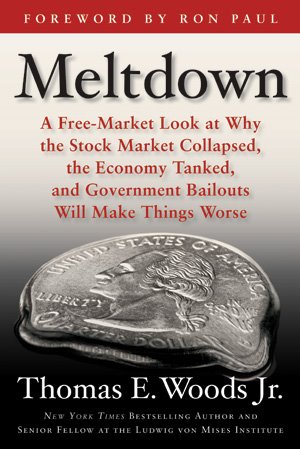
I highly suggest reading the entire article. Tom Woods has a great book on the subject as well. While "greed" and other variables naturally came along afterwords, this looks more and more like it began as a policy of putting people (or certain protected groups) before profits. It created the conditions for what was to come: manipulated markets, a housing bubble, and the Great Recession.
Thursday, October 13, 2011
Progressive Era Eugenics
I have two objectives for this post: 1) to create a page with some basic information on the various dark issues of the progressive era and 2) to provide a one-stop place for additional resources for further reading and reference. (I may update this page)
Eugenics and the Progressive Era
 Steven Horwitz and Art Carden presented a great article in the Freeman this month titled Eugenics: Progressivism's Ultimate Social Engineering, which is something I find very fascinating, as it is often a neglected part of America's history, and perhaps this is very intentional. It reminds me of intentions and how different they may be between, say, the progressives in the progressive era and progressives today (or are they?), yet how they have similar outcomes. Minimum wage laws are just one prime example where progressive eugenic advocates used laws enforced by government to indirectly exclude “the unemployable” or “low-wage races” from gaining employment. Back then, Fabian socialists and progressives acknowledged the consequences of greater unemployment with minimum wage laws but, as Sidney and Beatrice Webb put it, "this unemployment is not a mark of social disease, but actually of social health."
 It should be clear that for supporters of individual liberty and reduced government (or anti-Statist), Eugenics would not be possible. A government is the only institution that can be used to create and enforce eugenic policies. Here is where America--and much of the world-- transforms from laissez-fair to Collectivism.
Social Darwinism- Two Very Different Realities.
Thomas C. Leonard in Mistaking Eugenics for Social Darwinism: Why Eugenics is Missing from the History of American Economics writes:
“Social Darwinism” is not understood as a description of Darwin’s ideas applied to society. It has devolved into an omnibus term of abuse, encompassing the full catalog of capitalist ideologies the progressives are seen to have opposed. In the United States, “social Darwinism” connotes the use of vaguely Darwinian ideas—as reduced to stock phrases such as “survival of the fittest” and the “struggle for existence”—to explain and justify a brutish laissez-faire capitalism of late-nineteenthcentury America, and nearly always applies to laissez-faire scholars seen to oppose progressive-minded reform.
Darwinian Individualism
Social Darwinism owes much of its currency to Richard Hofstadter, and had been most frequently used as a pejorative against classical liberalism or laissez-faire capitalism. Herbert Spencer is known for coining the concept of "survival of the fittest" but his work predated Darwin and he did not fit the "Social Darwinist" type as commonly understood, i.e., he opposed the justification for war and imperialism. Laissez-faire could hardly be consistent the idea of State control of human breeding, yet social Darwinism is still attributed to the philosophy. Here we start to see the nascence of another type of Social Darwinism.
Survival of the Unfit
 Progressives had an underside that included scientific racism, eugenics and imperialism. Progressives viewed laissez-faire as a policy of promoting the 'unfit' to breed while the so-called 'fit' would be dwarfed in size over time because they tended to repopulate at lower levels. Eugenics policies needed to be adopted by the government in order to close the door to the unfit breeds of humans so that the "superior races" can survive and thrive. Progressive Era reformers drawn to eugenics believed that some human groups were inferior to others, and that evolutionary science explained and justified their theories of human hierarchy. This was a radical departure from the laissez-fair principle, but this became the other, more dominant, version of Social Darwinism. Richard Hofstadter developed a name for it: “Darwinian collectivism.”
Darwinian Collectivism

Eugenics advocated planned state control of human breeding. It was thought of as a method of population control, which could weed out the 'unfit' from society. Herbert Croly, founder of the magazine, The New Republic, was a proponent of Eugenics. For instance, he wrote an unsigned editorial in 1916 which tried to make peace between the eliminationists and sterilizers on the one hand and the uplift-the-downtrodden eugenists on the other. The common ground, TNR argued, was to be found in socialism:
We may suggest that a socialized policy of population cannot be built upon a laissez faire economic policy. So long as the state neglects its good blood, it will let its bad blood alone. There is no certain way of distinguishing between defectiveness in the strain and defectiveness produced by malnutrition, neglected lesions originally curable, or overwork in childhood. When the state assumes the duty of giving a fair opportunity for development to every child, it will find unanimous support for a policy of extinction of stocks incapable of profiting from their privileges.
Leo Lucassen of Leiden University in the Netherlands, writes in a journal, A Brave New World: The Left, Social Engineering, and Eugenics in Twentieth-Century Europe, "Today, there would seem to be a large degree of consensus regarding the relationship between eugenics and the progressive movement, certainly in the first half of the twentieth century, as Paul Crook remarked in his recent book on Social Darwinism: ‘‘In fact if you examine the rhetoric of eugenic science you find that it actually best fitted in with contemporary ‘progressivist’ language that celebrated social engineering and meritocracy, professionalism and the dominance of experts."
We can fairly say that the dominant form of "Social Darwinism" in the late 19th and 20th century was that of Darwinian Collectivism.
Scientific Racism
Government policies were to be adopted to help weed out the inferior races through primarily labor and immigration laws. Thomas C. Leonard writes:
Leading professional economists were among the first to provide scientific respectability for immigration restriction on racial grounds. They justified race based immigration restriction as a remedy for “race suicide,” a Progressive Era term for the process by which racially superior stock (“natives”) is outbred by a more prolific, but racially inferior stock (immigrants). The term “race suicide” is often attributed to Edward A. Ross (1901), who believed that “the higher race quietly and unmurmuringly eliminates itself rather than endure individually the bitter competition it has failed to ward off by collective action.” Ross was no outlier. He was a founding member of the American Economic Association, a pioneering sociologist and a leading public intellectual who boasted that his books sold in thehundreds of thousands. Ross’s coinage gained enough currency to be used by Theodore Roosevelt (1907), who called race suicide the “greatest problem of civilization,” and regularly returned to the theme of “the elimination instead of the survival of the fittest.” In that same year, more than 40 years after the American Civil War, Ross (1907) wrote: “The theory that races are virtually equal in capacity leads to such monumental follies as lining the valleys of the South with the bones of half a million picked whites in order to improve the conditions of four million unpicked blacks.”

Protecting the Family and Race
The Progressives had to develop additional reform policies to not only prevent the 'undesirables' from labor and immigration but they needed to promote policies that encouraged breeding of the "superior races. From the abstract of Thomas C. Leonard's work, Protecting the Family and Race: The Progressive Case for Regulating Women’s Work
Leading progressives, including women at the forefront of labor reform, justified exclusionary labor legislation forwomen on grounds that it would (1) protect the biologically weaker sex from the hazards of market work; (2) protect working women from the temptation of prostitution; (3) protect male heads of household from the economic competition of women; and (4) ensure that women could better carry out their eugenic duties as “mothers of the race.” What united these heterogeneous rationales was the reformers’ aim of discouraging women’s labor-force participation.
The Negro Project
The Negro Project MAAFA 21 is a very carefully reasoned, well-produced exposé of the abortion industry, racism and eugenics. It proves through innumerable sources that many founders of Planned Parenthood and other parts of the abortion movement were interested in killing off the black race in America and elsewhere.
If you would like to learn more about the progressive eugenics era, Thomas Leonard of Princeton University has more information.
Eugenics and Economics -how the first min-wage and other economic laws were used for eugenic purposes.
Excluding Unfit Workers - The "unemployable", Race Suicide, David-Bacon act, Progressive Scientific Statism.
Connections to National Socialism and Fascism
There are many factors that come into play with National Socialism and Fascism but it could be considered a sort of sister movement to Progressivism. The overall characteristics can be reduced to a hostility to laissez-faire, individualism, and limited government. The economics of Fascism and National Socialism closely resembled what Progressives advocated in for America and, in fact, many progressives praised the social and economic progress made in Germany; more on the economics of these ideologies here.
A Yale Study says that "While Nazi claims of Aryan superiority are well known, researchers said U.S. advocates of sterilization worried that the survival of old-stock America was being threatened by the influx of
lower racesfrom southern and eastern Europe. There was also mutual admiration, with early U.S. policies drawing glowing reviews from authorities in pre-Nazi Germany."
Germany is perhaps the most progressive nation in restricting fecundity among the unfit,editors of the New England Journal of Medicine wrote in 1934, a year after Hitler became chancellor.
 John Hunt also noticed in his work, Perfecting humankind: a comparison of progressive and Nazi views on eugenics, sterilization and abortion, that it was in North America, especially the United States, that the eugenics movement really became established. Historian Garland E. Allen wrote in Science misapplied: The eugenics age revisited that "the eugenics movement eventually became a worldwide phenomenon...[but] by far the most work occurred in Germany and the United States, whose eugenicists had formed a particularly strong and direct bond, especially after the Nazis came to power in 1933."
Garland E. Allen also wrote,
Progressive ideology, which called for rational planning and scientific management of every phase of society, was seen as the new and "modern" approach, and hence "progressive" by the standards of the day. For laissez-faire views it substituted an emphasis on state intervention and promoted the use of trained experts in setting economic and social regulatory policies.
A parallel between the economic and social milieu of the United States today and that of Germany in the Weimar and especially Nazi periods emerges in the debates over health care. Then as now, the discussions centered on decisions about who should receive what kind of health care and for how long.They often worked in terms of negative eugenics, which included forced sterilization, birth control, economic policies to segregate and dis-employ the 'unfit', and other methods of family planning. The goal is to week out the weak and collectivize society. The progressive financier George Perkins said the “great European war … is striking down individualism and building up collectivism.”
 "President Woodrow Wilson signed New Jersey's sterilization law, and one of his deputies descended to greater fame as a Nazi collaborator at Buchenwald. Pennsylvania's legislature passed an 'Act for the Prevention of Idiocy,' but the governor vetoed it .... Other states, however, joined the crusade. ... Eventually, the eugenicist virus found a hospitable host in Germany. There... it led to the death chambers of Buchenwald and Auschwitz. Thanks to the Nazis, highly praised by eugenicists here, the movement eventually collapsed. But not before nearly 50,000 Americans were sterilized." Writes R. Cort Kirkwood.
The whole idea of a scientifically planned and organized State is based on Socialist ideals.It was libertarian, classical liberal, and conservative people who held ideals based upon individual liberty that were against Eugenics and the other evils. The government is the only institution that can legally do these deeds and whether it is in 'benevolent' or malevolent hands, good intentions or bad, the problems will continue so long as the State maintains this power over the lives of individuals.
Flynn, in his penetrating book, The Road Ahead, examining America's creeping revolution stated, ". . . the line between Fascism and Fabian Socialism is very thin. Fabian Socialism is the dream. Fascism is Fabian Socialism plus the inevitable dictator."
More Sources.
The Frightening Agenda of the American Eugenics Movement
- The Darwinian left and the concept of Eugenic socialism
- Empire Socialism and the Cult of Efficiency
- Socialist Nationalism and Nationalist Socialism
Thomas C. Leonard of Princeton University is has some of the most accomplished work on the Progressive Era.
Individually:
Additional Scholarly works:
Subscribe to:
Posts (Atom)